
Customer Reviews With Photos
This is 15' feet of heavy duty 50 amp generator cord with a secure twist plug and inlet box. The inlet box is sturdy and well made heavy duty galvanized steel. The cord is #6 wire for 50 amp and is well made with excellent insulation and heavy duty locking plug. Living in a Hurricane prone area, I have been wanting to have a generator plug to work with my solar panels and generator for sometime. I am very pleased with this power cord and plug box and I especially like the long cord so I can get my generator further away from my home so the noise and fumes are decreased. I think this generator plug is great. It is safe and exactly what I was looking for and I would recommend it.

Seems okay. Heavy fabric, but I still tuck it under the wheels and the front supports so it won’t blow away. The gas zipper access is a nice feature, as is the window. The cover collects rain, as shown in the pictures. I’ll be putting something in there to make it a flat top or a ridge. This is covering a Predator 13000. Overall it’s decent as a budget option that should stay on when running. I’ll update later on that.

I started with the ECOFLOW Delta-2 by a mishap, but it was easily cleared up by their superior customer service. I now am the proud owner of the Delta 2 MAX. I have some photos of the readings from a gloomy/overcast/cloudy day, where I was still pulling some wattage to charge the system (around 35-45 watts) Then some sunny day shots of the panels set up using their built-in stand=works very well, especially since it is actually a built-in stand from the protective/zip up cover/storage for your expandable panels. They fold out easily and set up just as easy. Make sure to take advantage of the dual surface capabilities! I have pumped out 190+ watts using reflective materials that project the sun's rays unto the back of the panels as well. With the sun at 10-2 pm, and no reflective materials set up yet, I was cranking out 140-160 watts, as shown in the pics. I do not remember if I got the 190+ watt shots, but I will check my phone and post if I can find them, if not, I will get some as soon as I drain the MAX and have to charge it back up. These panels are rated at 220W, and saving you from boring details of specs etc., that equates to around 140-160+- watts during full sun in California. If you need to charge it fast for a trip, use the wall plug, it CRANKS the watts, I have a shot where its at 1152 wats from the wall outlet in my house. The max is portable and light for what it pumps out, "quietly". I am around 6' 200lb weight lifter type guy, and it is light for me, I can carry the generator in 1 hand, and the panels in the other, so many of you fellow muscle guys & gals will be able to do the same I'm guessing, otherwise, just make 2 trips or get a buddy. I also show some shots of it running a dyson vac & washing machine at the same time=EASY for the max. I ran my fridge with the D-2, so the max will have no problem with the fridge as well. The customer service is amazing, responsive to you within 24 hrs, sometimes within the same day=few hours even. They are so professional and kind, even fun to speak with. All have been from the Philippines, and I have YET to receive anything less than superior customer service quality from the Philippines, its as if they were born with superior CS skills built in. I am very grateful for their abilities to handle any and all issues I had after my initial purchase, and the follow up is just as high quality. AND, the issues were minor, and few. Mainly my misunderstanding of specs/etc. as I am quickly learning about the solar products. They have been a HUGE help & friends to my new venture into solar power. YES, I said FRIENDS! Think of one of your best friends, and they stand behind their products like a best friend would stand behind you. Why do I mention this? Because I know how I felt about purchasing my first solar generator, the anxiety & plethora of questions in my head. I have been researching for a few Years, and I am 100% glad I chose ECOFLOW, and I have complete confidence to put MY NAME on their customer service and product support. Bottom line, you CANNOT GO WRONG with ECOFLOW products if all their CS reps are like the ones I spoke with, PLUS their products are performing up to and beyond expectations! At this point, a few months in to owning the MAX, I am extremely happy, and satisfied with every aspect of their company, how often can any of us say that today? I will be investing in a whole home system sometime in the near future, and ECOFLOW is at the top of the list.

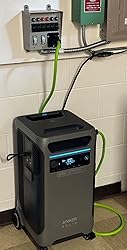
The Anker SOLIX F3800 has proven to be an impressive addition to my power setup. The setup process was straightforward and user-friendly, which was a pleasant surprise given the complexity of some power systems. The unit's ability to connect via Bluetooth or Wi-Fi made monitoring and controlling the system convenient, especially using the iOS interface, which was a breeze to install and navigate. Visually, the SOLIX F3800 looks fantastic once installed. The design is sleek and modern, blending well with the surrounding environment. The unit's build quality is outstanding, and it was also very well packed, ensuring it arrived in perfect condition. The inclusion of wheels and a telescoping handle, along with locking wheels, makes the 130-pound unit much easier to maneuver despite its weight. I’m currently using the SOLIX F3800 with an AC Transfer switch via the 220 VAC output. While this setup works well, I've encountered a limitation: the 220 VAC output is disabled when the unit is connected to AC input power with the 220 VAC output enabled. This prevents me from leaving the AC Transfer switches in the "Generator" position. However, this issue does not occur if connected to the DC charging inputs, typically used for solar panels. To work around this, I'm considering purchasing DC power supplies for the DC inputs, which would add approximately $500 to the project but should resolve the problem. One area where I feel the product could improve is the manual. While the instruction manual is available in the app and can be downloaded, I would have preferred a professionally produced hard copy. Overall, though, the Anker SOLIX F3800 is a robust, well-designed power solution that has met my needs with only minor caveats.
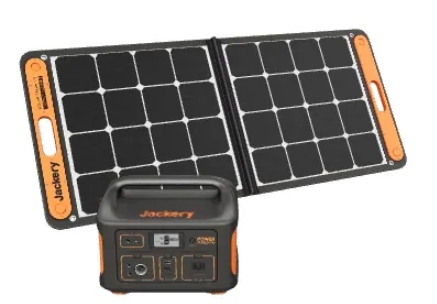
Firstly the panel and battery were shipped in separate packages and arrived at different times which would be fine but I didn’t get both tracking numbers which was a bit frustrating. Seems like bad logistics on Jackery’s side. Aside from that so far so good. 100wh battery paired with a 40 watt solar panel seems like a really good match. In the photos it’s mid day in mid October (cloudless) so not direct overhead sunlight and it’s getting 34 watts in. Literally wouldn’t expect any better than that and battery says it’ll take around 2.8 hours at that rate. Not bad at all. I fully charged it and used it over the weekend to charge a headlamp, two phones and an iPad that was used to watch a couple movies. I didn’t have the panel at the time so I didn’t top off the charge and that usage took the battery to 0. I also noticed that it dropped super quick from 20% to 0…much faster it seemed than before it hit the 20% mark. A few other things I don’t love: 1. Only 3 ports- compared to competitors 5 ports 2. Does not work with Jackery app 3. It’s small but a little handle might be nice, or make it a more portable shape I’m going to keep testing it to measure how long it lasts. I saw other reviews mentioning that it didn’t last as long as other similarly sized batteries which I found interesting. I’d think brand new 100Wh is a 100Wh but I’ll compare it with some other power banks I have and circle back if I find anything interesting. Overall I’m pleased with it, though through no fault of its own you really are limited on what you can do with a 100Wh battery. I’d say super useful to keep your handheld devices charged on a camping trip and that’s about it.

These brackets are made from a thick, heavy metal that will definitely take weight and time like a champ. I was really impressed by the overall material quality. The metal is mostly surfaced to a smooth finish to resist rust, though looking very closely inside of some of the hole cutouts I found a few roughly surfaced areas that were less well finished, and would be more prone to rusting over the years. I included a very closeup image of what I mean in my review pics. I still expect these to perform well, but that is one less than perfect aspect I found while working with these. Actually installing the brackets is surprisingly easy, because larger panels are quite heavy and fragile I chose to lie one on its face on a safe work surface and begin bolting the main supports to the back, adding the legs and stabilizer bars as I went. The adjustable knob bolts are very strong, and make doing adjustments pretty easy- provided you haven't already gotten this installed somewhere, then you have to hold it up while doing the adjustments so it won't fall, which is a little more tricky. All told it took less than 10 minutes to go from sorting all of the parts out to actually having one bracket setup with a panel to try it out. I used just one 100 watt panel, but these can easily accommodate two, I really liked the large size with a lot of adjustment options. Compared to flat-mounting on a roof these really let you get the best possible angle, after a little fiddling around testing positions with my voltmeter I was able to find the tilt degree that worked perfectly. For two large, very strong brackets that can accommodate 4 large panels, or less in different configurations, this is a great value and made pretty well. Setup was really easy, and the result looks very professional. I am really impressed by the thickness of the metal, absolutely solid, and it is mostly finished perfectly, with only a few rough edges inside some of the hole cutouts. I will definitely be trusting these to hold my multi-panel setup once everything is ready, they are the sturdiest brackets I have ever had, and I would definitely choose them again.

I bought this module to protect my generator. I’ve heard stories about generators getting overloaded and damaged, and I wanted to avoid that. This device is supposed to monitor the generator and automatically disconnect certain circuits if it detects an overload. It looks like a simple enough device. It’s gray and not too big. I like the idea that you can set which circuits are most important. That way, during an outage, you can ensure that the essentials are powered. I haven’t experienced a power outage since installing it, so I can’t comment on its performance in a real-world scenario, but it gives me some peace of mind.

This solar panel is the real deal. I bought this to keep on hand for emergencies. I live in Florida and coincidentally hurricane Helene hit soon after. We lost power and this panel charged my ecoflow delta 2 like a champ. Consistently provided anywhere between 340 to 360 watts. The panel is built incredibly well with premium materials. Fully waterproof too, which is nice because when it rained, I just left the panel outside, and the solar panel literally weathered the storm and works just fine. Definitely recommend the solar panel for larger power stations. Pros: very high output and very efficient, durable, waterproof construction, includes an adapter cable that worked with my power station and is also 12awg gauge so it can safely handle high current, the detached kickstand brackets I prefer because they’re very strong and sturdy which helps the panel stay upright if there’s any wind, and the carry bag is a nice addition. Cons: it’s big and heavy but that’s expected with a 400 watt panel, the detached kickstands are a little difficult to use at first due to the sheer size of the solar panel but are manageable once you get the hang of it (and you don’t need to constantly take it down since it’s waterproof so not really much of an issue).

I picked up this 20W solar charger to keep the battery on my tractor maintained since it’s usually parked far from any power outlets. Setup was straightforward with just four screws and nuts. The instructions were clear and covered everything I needed to know. One small note: the product photos show a bare aluminum bracket, but mine came painted white. I don’t mind the difference, and maybe it even adds extra weather protection. Just something to be aware of. The solar panel does exactly what I needed it to. Since I already had an SAE port on my tractor for a wall charger, I had to use an SAE polarity reverser with this solar panel. Not a big deal. If you’re using this as a permanent solar charger, you can wire it accordingly following the instructions. For now, I just prop it up on the tractor or place it nearby, and it keeps the battery topped off with no issues. The 360° mount helps keep it angled toward the sun, and I appreciate that it has holes for more permanent mounting later. I plan to install a post out near where the tractor sits and attach the panel there. The panel has held up through moderate rain with no problems. The build quality is solid, with a rigid aluminum frame and no flex or cheap feel. The controller works well and the indicator lights show what’s going on at a glance. I also like that it has built-in protections for overcharging and reverse current. I haven’t had any issues, and the battery is always strong and ready to go when I need the tractor. Packaging could have been a little better. A few small parts were loose in the box that really should have been bagged or taped down, but nothing was damaged. This is a huge step up from the tiny solar charger I had before that wasn’t doing the job. This one just works. For the price, it’s an excellent value and I would definitely recommend it to anyone looking for a low-maintenance way to keep their 12V battery charged.

I have not plugged in my electric charger since I installed this solar charger on my golf cart. This unit has no trouble keeping up.

The bag itself is better than the one that came with my generator, but the measurements given seem a little generous to me. It's possible the size varies slightly with each sewing but measuring the one I got I would say the internal measurement is closer to 9 x 7 x 7. The measurements in the listing wording is close, but the measurements on the picture in the images are definitely too large. So if you have a very petite generator this might work, but it didn't fit mine. If you are ordering this, I would measure your generator and make sure there will be room to spare, as the one you get might run a bit smaller. Having said all that, if it had fit, it would of been a nice improvement over the one I have.

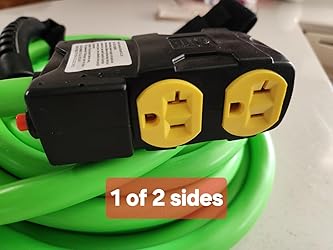
The Acxccdn 25 foot generator extension cord converts the 240VAC NEMA L14-30 to separate dual 120VAC standard 3 prong outlets that are protected by 20A circuit breakers built into the quality outlets ! This 10 gauge 25 foot extension cord is made for the outdoors, direct sunlight rated, and is waterproof. This product was tested under load and performed flawlessly. This was the product I was looking for to power all of my indoor 120VAC devices directly from the 240VAC generator outlet. Overall product quality is very good, the 120VAC 3 prong sockets are very solid and I really like the integrated 20A circuit breakers in each 120V phase.
Seller states that this kit is compatible with Generacs produced in 2008 or later. Before I start blowing fuses and frying circuit boards, I look at everything to make sure I'm doing it right. However the kit's instructions have references to year models from 2012 to 2015, and 2016 and newer units. Trying to match the illustrations to my 2010 20kw generator didn't help until I removed the top control panel looking for anything that looked like the illustrations. So the instructions might be straight forward for some models, they aren't as specific for others. Although I installed my Generac in 2010, I wasn't sure if it was manufactured earlier than 2008. My serial number look up didn't match any of the year codes that I could find on-line. I called Generac customer sevice and was told my generator was built 8-13-2010. So I was in the zone for this heater kit for my unit. Generac customer service also provided me with instructions for a "cold weather startablity kit for units built after April 2010". It has the Part number 0H7888 and can be found on-line. The Generac instruction sheet illustrations are more in-line with my 20 kw Generac which gave me a better sense of where I'm attaching two wires at 240 volt terminals. (Unfortunately, Figure 5 of the Generac provided instructions has an error showing one wire plugged into the N1 terminal and the second wire plugged into the T1 terminal. The exploded view differs and corrects this showing the wires going to the N1 and N2 terminals as all text instructions tell you to do). So with all the mysteries over with, I read though the Generac provided instructions again and read on Step 8 that... "Some units may already be equipped with accessory connectors to plug in both heaters. (Figure 4). If your unit is so equipped, plug in heaters and skip to Step 12. If accessory connectors are not present, proceed to Step 9." Wouldn't that be nice if my Generator had that. So another look and it does. Unfortunately, the supplied kit instructions have no reference for that. So minus one star. One other note is that the oil filter heater will not fit over the 070185ES oil filter as it is much larger than the standard 070185E oil filter. Photo's provided show my unit already equipped with accessory connectors to plug in heaters at the oil filter and battery compartment. I'm sure it would have worked if I have followed the supplied instructions and wired into the terminals as well, but with the already accessory connectors it was a quick and sure install. Although we're heading into summer and it's not likely the kit will be needed, it's there for when it does get cold. A nice kit for the price point and I'm glad I have it. Hopefully some of the information provided here will help.

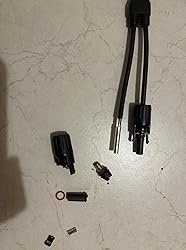
it was absolutely impossible to disconnect. I had to break the connector and pull out every small part separately.
In reading many of the reviews, there isn't a proper analysis of the performance of this solar panel. Most of the feedback is anecdotal. I have set up this solar charging panel to charge a backup battery that I intend to use for portable radio operations (POTA). The battery is a "Howeasy" 88 Wh lithium ion power station with a various outputs including 12 volts DC , 110V AC and USB charging outputs. The battery is charged at 15-24V with a nominal input of 15V/1.5A with a solar panel. The powerpack supports pass through charging. The solar panel is extremely well built and has a heavy duty/rugged quality feel. It folds into a manageable size package for backpacking. The charger is bundled in a heavy duty rip-stop material cover. It comes with a complete kit of plugs that will fit almost every need. The plugs are stored in a pocket designed into the cover. I configured the solar charger with the battery in full December afternoon sun. The charger came to life immediately. It was connected to the battery's charge input. The battery was partially discharged prior to charging. Initially, the charger operated at 22volts at 1.5A (33W) As the charge continued, the amount of current pulled by the battery diminished until the battery was fully charged. For this exercise, I did not attempt to charge a fully discharged battery. With the charger plugged in and opened to the sun, my radio drew 25 watts of power from the battery while the battery voltage stayed right at 12 volts. With the solar charger unplugged, the battery voltage under load eroded to between 10.7V and 11.4V which is a battery issue. Many of the reviews remark that the charger puts out less power than specified. What people need to understand is that the amount of power that the solar charger delivers is dependent on the load (the battery) The battery power draw is determined by the battery's Battery Management System (BMS) that controls the charge rate of the battery. While the charger is specified to provide up to 60 Watts, the battery may not draw this amount as was demonstrated here. A proper evaluation of the solar charger would employ a calibrated laboratory load which I did not have. Bottom line: This is an ideal charger for the power station that I have and I am pleased with my purchase. It is well built and well configured. I would recommend this product.
